
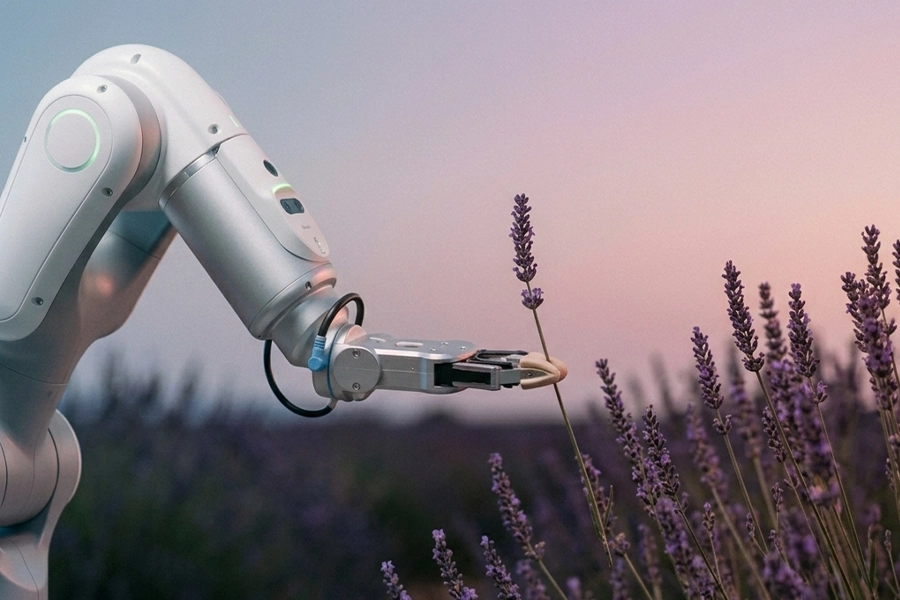
Technology is evolving rapidly, with new breakthroughs moving from research and experimentation toward real-world applications. As these developments continue, they are changing what is possible across industries and opening new possibilities for the future.
Here are some of the key technologies pushing those boundaries today.
1. Brain-Computer Interfaces (BCIs): From experimental implants to early clinical use
Imagine controlling technology with your thoughts. New advances could help restore movement and communication, while opening possibilities far beyond healthcare.Here are two examples of how BCI technology is being explored:
- BCI4Kids – University of Calgary: A program exploring brain-computer interface technology to help children with severe disabilities interact with their environment and improve their independence.
- Brain-Computer Interfaces in Post-Stroke Motor Rehabilitation: An overview of the emerging role of BCIs in stroke rehabilitation, including how brain signals may be used to support motor recovery and what current evidence suggests about their effectiveness.
2. Autonomous driving has entered early commercial deployment
Robotaxis are now operating commercially in multiple cities, although safety, regulation and scalability remain key challenges. Recent developments from leading autonomous driving companies and regulators offer a closer look at how the industry is progressing.Related Developments
- Waymo expands robotaxi operations: Read the report
- Zoox receives regulatory approval for commercial deployment: Read the announcement
3. Robotics: AI-powered machines enter real-world deployment
What if robots could learn, adapt and work alongside us? AI is helping machines take on more complex tasks across industries and real-world environments. Recent deployments by robotics companies and manufacturers show how AI-powered machines are moving from controlled demonstrations into practical industrial applications.Related Developments
- Figure AI brings humanoid robots into manufacturing: Read the company update
- BMW explores humanoid robots in factory operations: Read the announcement
- Skild AI brings general-purpose AI to industrial robots: Read the Reuters report
4. Quantum Computing: The race for reliable qubits
Researchers are working to make quantum computers more stable and error-resistant, moving toward reliable, fault-tolerant systems. Recent breakthroughs from leading quantum computing companies and research teams highlight the progress being made toward more stable, error-resistant quantum systems.Related Developments
- IBM and the University of Chicago demonstrate advances in reliable quantum computing: Read the announcement
- IBM connects modular cryogenic systems in a step toward fault-tolerant quantum computing: Read the announcement
- Microsoft advances its work on logical qubits and error correction: Read the research update
5. AI is moving from answering questions to getting things done
Agentic AI is taking a step beyond chatbots by handling goals, planning tasks and taking action with less human input. Reliable autonomy and human oversight remain key. Several AI companies are already developing and introducing tools that can plan tasks, use digital tools and carry out multi-step workflows with less human intervention.Related Developments
- Google expands Gemini’s capabilities for workplace tasks: Read the announcement
- OpenAI introduces ChatGPT agent for complex online tasks: Read the announcement
- Google Cloud expands its platform for building and managing AI agents: Read the announcement
6. AI Chips: Powering the Next Generation of Computing
As AI gets more powerful, it needs smarter hardware to keep up. New AI chips are being built to make computing faster, more efficient and scalable. New announcements from leading chipmakers show how companies are designing specialised processors to meet the growing demands of AI workloads.Related Developments
- Google introduces its eighth-generation TPUs for AI training and inference: Read the announcement
- NVIDIA’s Vera Rubin platform enters full production to power large-scale AI systems: Read the announcement
- AMD unveils its next-generation AI computing infrastructure: Read the announcement
